
Defining Your Walls with the Bold Sophistication of Uttermost Mirrors
Learn how Uttermost mirrors redefine your walls with elegance and balance. Explore placement tips, design ideas, and statement décor for modern homes.
Walls do more than hold up a room. They shape how a space feels the moment you walk in. Yet they are often left plain, or filled without much thought. One of the simplest ways to redefine a wall, without repainting or remodeling, is with a mirror that carries presence. Not just reflective glass, but a piece that feels intentional. This is where uttermost mirrors stand out, offering bold sophistication without forcing attention.
Mirrors have always been practical, but in modern interiors, they have stepped into a design role. Today, a well chosen decorative wall mirror is less about checking your reflection and more about shaping light, scale, and mood. Discover thoughtfully selected décor at Modest Hut. Explore our website and order today.
Why Mirrors Change the Way a Room Feels
Mirrors interact with space in a way few design elements can. They reflect light, open up corners, and visually extend walls. A room with the right mirror often feels brighter and more balanced, even if nothing else changes.
There is also a psychological element. Mirrors give a sense of depth. They break the flatness of walls and add movement. In smaller spaces, this effect is obvious. In larger rooms, it brings rhythm and focus.
Think of mirrors like windows that do not require structural changes. They frame the room back to itself.
What Sets Uttermost Mirrors Apart
Not all mirrors serve the same purpose. Some blend quietly into the background. Others become defining features. Uttermost mirrors are designed to do the latter without overpowering a space.
Their frames often carry sculptural quality. Materials feel substantial. Finishes are refined, not shiny for the sake of shine. These mirrors are made to be noticed, but not stared at endlessly. They feel composed, grounded, and thoughtful.
This balance makes them especially effective in modern and transitional interiors where bold details need to feel controlled.
Using Mirrors as Wall Anchors
One of the strongest ways to define a wall is to let a mirror anchor it. Instead of layering multiple small pieces, a single statement mirror often delivers more visual confidence.
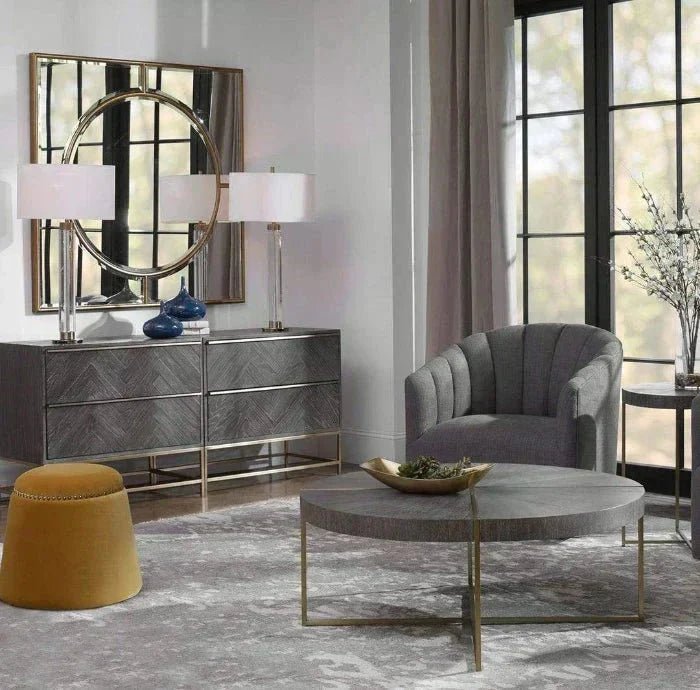
For example, a large decorative wall mirror above a console immediately gives the wall purpose. It signals that the space has been considered. Everything around it, lighting, furniture, negative space, starts to make sense.
This approach works well in entryways, living rooms, and dining areas. Even bedrooms benefit when the mirror feels like part of the architecture rather than an accessory.
Playing With Shape and Proportion
Shape matters more than people realize. Rectangular mirrors feel structured and calm. Round mirrors soften hard lines. Arched mirrors introduce elegance without formality.
Choosing the shape depends on what the room needs. A space with strong angles may benefit from curves. A softer room may need sharper geometry to bring balance.
With uttermost mirrors, the proportions are often the quiet hero. Frames are thick enough to feel intentional, but not so heavy that they dominate the wall.
Light Is the Silent Partner
Mirrors and light work together. Place a mirror across from a window, and the entire room shifts. Natural light spreads. Shadows soften. Even artificial lighting benefits from reflective surfaces.
This is where wall placement becomes important. Instead of centering a mirror purely for symmetry, consider what it reflects. A well-framed light source, artwork, or architectural detail can double its impact.
It is a subtle decision, but one that elevates the entire room.
Avoiding the Overdecorated Look
One common mistake is treating mirrors like filler. Hanging several mirrors or surrounding one with too many accessories weakens their effect.
Sophisticated interiors often rely on restraint. A single strong mirror paired with clean wall space feels more luxurious than a wall crowded with decor.
Think of it like a tailored outfit. One striking accessory carries more weight than many competing ones
Where Uttermost Mirrors Work Best
Entryways are an obvious choice. A bold mirror creates an immediate impression and adds function without clutter.
Living rooms benefit when mirrors are used to balance seating arrangements or highlight focal walls. Dining rooms gain depth and reflect ambient lighting, creating a warmer atmosphere.
Bedrooms work well with mirrors that feel decorative rather than utilitarian. The goal is elegance, not constant reflection.
Even hallways, often overlooked, can feel intentional with the right decorative wall mirror placed strategically.
Mixing Mirrors With Other Materials
Mirrors do not exist in isolation. They interact with textures around them. Wood brings warmth. Metal adds contrast. Soft fabrics balance the reflective surface.
This interplay is what creates a layered, livable look. When mirrors are paired with thoughtful materials, they stop feeling cold and start feeling curated.
That balance is a hallmark of interiors that feel complete.
Conclusion
Walls deserve more than decoration. They deserve definition. Uttermost mirrors bring bold sophistication to interiors by offering more than reflection. They shape light, anchor spaces, and quietly elevate rooms without demanding attention. A carefully chosen decorative wall mirror can transform how a space feels, not through excess, but through intention. When mirrors are selected with proportion, placement, and restraint in mind, walls stop being background and start becoming part of the design story. Designed to elevate everyday spaces, Modest Hut offers statement décor with lasting appeal. Check out our website and place your order today.
FAQs
1)Where should I place a decorative wall mirror for the best effect?
For the best results, place mirrors opposite windows, above consoles, fireplaces, or in entryways. This helps maximize natural light, create visual balance, and make rooms feel larger.
2) Can I mix different mirror shapes in the same room?
Yes, but it is best to maintain a common theme, such as matching frame finishes or a consistent design style. Using a round mirror to soften a room with rectangular furniture creates a sophisticated contrast.
3) How high should I hang a decorative wall mirror?
The center should sit at eye level, roughly 57 to 62 inches from the floor. If placed above a console, leave 6 to 8 inches of space between the furniture and the frame.
4) How do I choose the right size mirror for a wall?
Aim for the mirror to be two-thirds to three-quarters the width of the furniture below it. For empty walls, choose a large-scale piece so it anchors the space rather than appearing lost.
5) How do I clean an Uttermost mirror without damaging the frame?
Spray glass cleaner onto a microfiber cloth rather than directly on the glass to avoid liquid seeping behind the frame. Wipe the frame with a dry, soft cloth to preserve its finish.



Leave a comment
This site is protected by hCaptcha and the hCaptcha Privacy Policy and Terms of Service apply.