
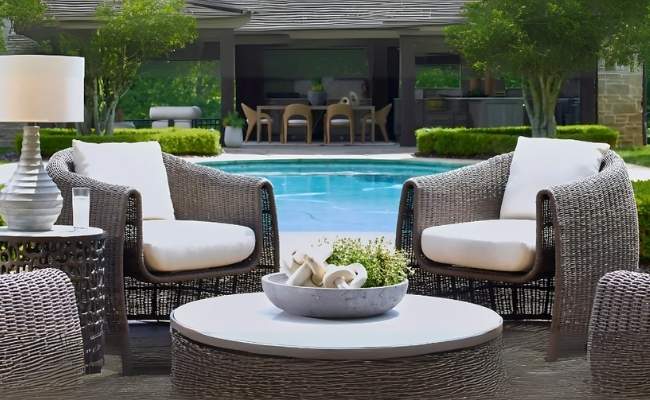

Modern outdoor furniture • Outdoor living • Practical styling
Modern Outdoor Living: How I Build a Patio That Feels Finished
Executive Summary
When I design an outdoor space, I’m building a functional room under tougher conditions. The winning formula is consistent: clear zones (dining + lounging), durable materials, and a low-friction maintenance plan that keeps everything looking intentional.
This post features products from Modest Hut’s selection. Shop the full lineup here: Modern Outdoor Furniture collection.
- Zones first: every seat gets a nearby surface.
- Texture over clutter: rope/wicker/concrete + one clean pattern.
- Repeat finishes: a few repeated tones look “designed.”
My Outdoor Living Framework
I start with two tests: (1) every seat can reach a surface, and (2) paths stay clear. Then I simplify the look by repeating finishes and relying on texture—so the space feels modern without feeling empty.
In practice, that means: one dining moment, one lounge moment, then support pieces (tables, planters, pillows) that make the space actually usable.
Material signals I trust outdoors
When durability is the priority, I look for construction details that signal long-term performance. I’m not chasing “indestructible”—I’m choosing materials that age predictably and are easy to reset with simple cleaning.
- Powder-coated metal frames: clean lines, wipeable surfaces, and strong weather performance (as specified per product).
- Solution-dyed acrylic textiles: built for outdoor color retention and routine spot-cleaning (as specified per product).
- All-weather wicker or rope: texture without extra decor; I use it as a design layer.
- Concrete (reinforced / glass-reinforced): stable “anchor” pieces; I plan for freeze-thaw conditions where relevant.
Dining and Hosting: Build a Zone That Feels Intentional
Dining works when comfort and boundaries show up. I like wood + woven texture to elevate the look, then I use planters to “frame” the zone so it doesn’t feel like chairs floating in open space.
- Keep tabletop decor minimal for a modern line.
- Repeat one tone (dark, slate, or warm wood) across pieces.
- Use planters like architectural edges.
Featured dining + planter pieces

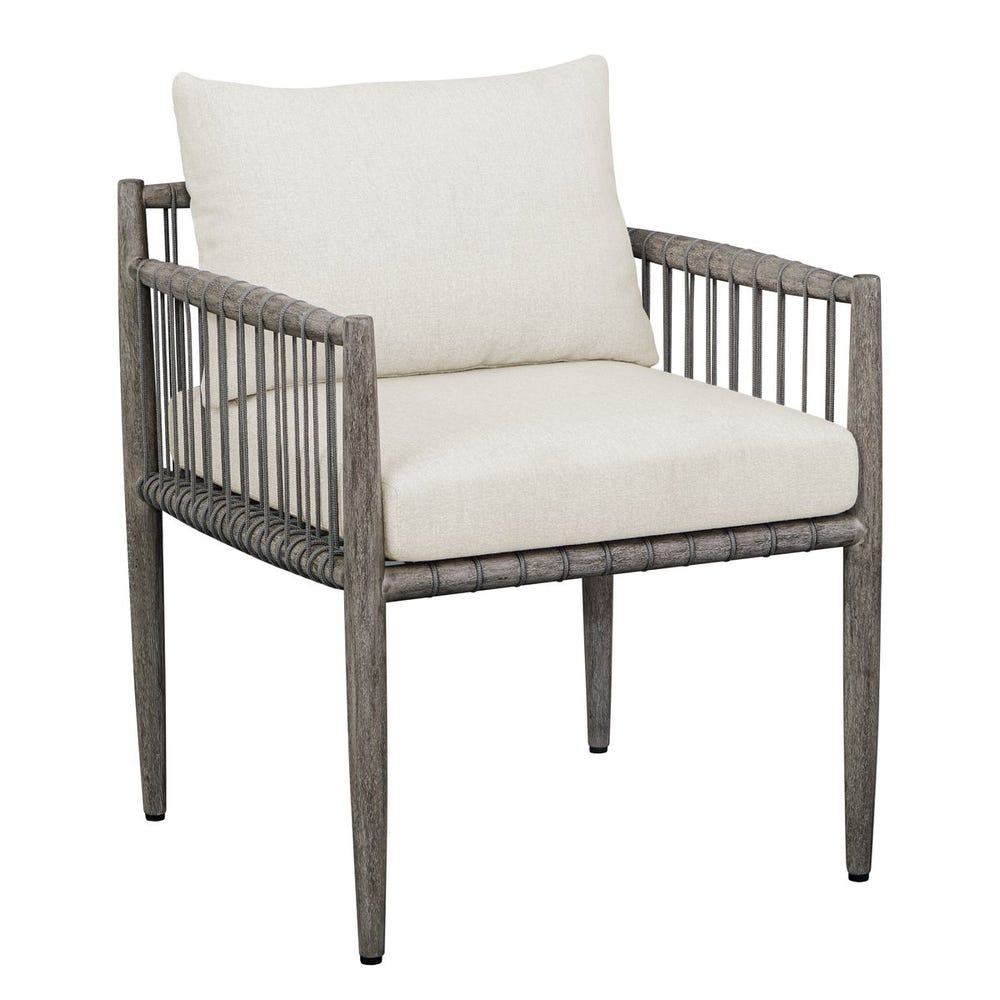
Resort-style texture: wood + rope + a crisp light cushion.
Materials: mahogany; olefin rope; performance fabric (as described)
Benefits
- Elevated look without “busy” styling.
Styling tips
- Pair with minimal tabletop styling and planter framing.

Grounded mixed-material dining: wood frame + wicker texture (as described).
Materials: mahogany; all-weather wicker (as described)
Benefits
- Wicker texture reads relaxed and durable.
Styling tips
- Echo darker tones with slate/black accents.

Timeless Terrace Outdoor Planter
Large-scale planter that makes a zone feel built, not improvised.
Materials: reinforced concrete (as described)
Benefits
- Instant structure and scale.
Styling tips
- Use as a pair to flank dining or lounge zones.

Echoes of Time Outdoor Planter
Rounded, character-forward planter that softens modern geometry.
Materials: reinforced concrete (as described)
Benefits
- Great for layering heights and corners.
Styling tips
- Cluster in twos for a cleaner modern read.
More options in the same style lane: browse the outdoor collection.
Lounge Zones: Modular Comfort with Clean Modern Lines
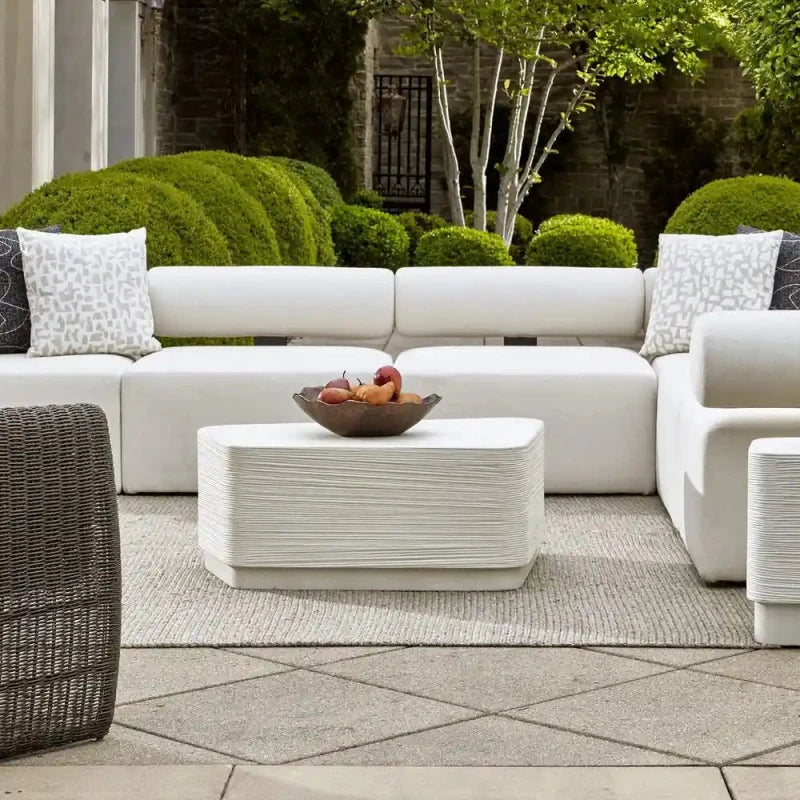
I build lounge zones for real use: deep seats, a coffee table anchor, and a predictable place to set things down. Modular seating is my go-to because it scales—corner defines the room, armless expands it—so you can reconfigure without replacing everything.
- Corner module = definition.
- Armless module = capacity without bulk.
- One repeatable pillow pattern = modern softness.
- One hero chair = silhouette contrast.
Featured modular + soft goods

Bolster Back Outdoor Corner Sofa
The “turning piece” that defines a lounge layout.
Materials: powder-coated aluminum frame (as described)
Benefits
- Instant lounge-zone definition.
Styling tips
- Pair with a strong coffee table and planter backing.

Bolster Back Outdoor Armless Sofa
The clean “expander” module for longer runs of seating.
Materials: powder-coated aluminum frame (as described)
Benefits
- More seats with less visual bulk.
Styling tips
- Use with a corner module for an L-shape.

Hero-chair silhouette that upgrades the whole zone.
Materials: all-weather wicker; solution-dyed acrylic (as described)
Benefits
- Adds focal-point shape without extra clutter.
Styling tips
- Use one chair to punctuate, or two for symmetry.

One neutral pattern to soften seating while staying modern.
Materials: outdoor fabric + poly fill (as described)
Benefits
- Adds finish and comfort with minimal effort.
Styling tips
- Repeat one pattern style instead of mixing many prints.
Tables and Accent Pieces: Where the Patio Becomes Livable
Tables are the difference between “looks nice” and “gets used.” My mix is straightforward: one sculptural coffee table to anchor (heavier and stable), then accent tables placed exactly where hands naturally fall (lighter and easy to move).
Featured tables

Parra Outdoor Coffee Table (Slate)
Coffee-table sculpture that anchors a lounge zone.
Materials: glass reinforced concrete (as described)
Benefits
- Creates a strong “center of gravity.”
Styling tips
- One tray + one vessel is enough.

Small color pop that still fits a modern palette.
Materials: powder-coated metal (as described)
Benefits
- Easy personality without overcommitting.
Styling tips
- Place between two seats for shared use.

Organic shape that softens straight-lined layouts.
Materials: glass reinforced concrete (as described)
Benefits
- Brings movement to modern lines.
Styling tips
- Keep top styling minimal to show form.
Seasonal Maintenance Plan
The simplest way to extend the life and appearance of outdoor furniture is to follow a repeatable seasonal cadence: wash at the start of the season, keep surfaces clear of debris, tighten hardware as needed, and store or protect items when weather becomes harsh.
Planters and concrete-based pieces can be especially impacted by freeze-thaw cycles; at minimum, follow any product guidance about avoiding freezing conditions (or protecting items during freezes).
Seasonal checklist fallback
- Early spring: dust, wash, rinse, dry; tighten fasteners.
- Late spring: refresh cushions; fully air-dry.
- Summer: weekly wipe; after storms, dry textiles and clear debris.
- Fall: end-of-season clean; cover or store.
- Winter: minimize harsh exposure; follow freeze guidance when specified.
Further reading and video
Further reading (.edu): Maintenance of Outdoor Furniture (Iowa State University Extension and Outreach) .
Video: “Backyard Makeover: Transform Your Patio With Pops of Color & Space-Maximizing Outdoor Furniture” by Rachael Ray Show.
Comparison Table
I use this as a quick selector. “Indoor/outdoor” is shown only when the product listing explicitly describes it; otherwise, indoor use is marked as unspecified.
| Product | Materials | Use | Indoor/outdoor | Link |
|---|---|---|---|---|
| Mahogany; olefin rope; perf fabric | Dining | Outdoor (indoor: unspecified) | View | |
| Mahogany; wicker (as described) | Dining | Outdoor implied (indoor: unspecified) | View | |
| Powder-coated aluminum; cushions (as described) | Lounge | Outdoor (indoor: unspecified) | View | |
| Powder-coated aluminum; cushions (as described) | Lounge | Outdoor (indoor: unspecified) | View | |
| Wicker; solution-dyed acrylic (as described) | Lounge | Outdoor (indoor: unspecified) | View |


FAQ
What should I buy first: dining or lounge?
I start with the zone you’ll use weekly. Then I add the second zone and fill gaps with surfaces and planters.
How do I keep the look modern?
Repeat a few tones, use texture for depth, and limit patterns to one repeatable pillow style.
How many side tables do I need?
I aim for one accent table per two seats, then adjust based on how you host.
Can I use indoor/outdoor pieces inside?
Only when the product page explicitly says indoor/outdoor. Otherwise I label indoor use as “unspecified.”
What’s the simplest maintenance routine?
Spring reset, summer wipe-downs, fall clean + cover/store, winter protection. The key is consistency.
How do I make a patio feel “finished” fast?
Add one coffee table, one accent table, two planters, and one patterned pillow style.
Explore more outdoor pieces here: https://modesthut.com/collections/modern-outdoor-furniture.



Leave a comment
This site is protected by hCaptcha and the hCaptcha Privacy Policy and Terms of Service apply.