

Decorative accessories guide
A decorative tray or bowl can make a room feel intentionally styled in seconds. The difference between "placed there" and "designed there" usually comes down to scale, material, and what you allow the piece to hold.
Quick answer: when to use a tray, when to use a bowl
Use a decorative tray when you need structure. Trays gather smaller objects into one visual zone, which is why they work so well on coffee tables, ottomans, consoles, bathroom counters, and outdoor entertaining surfaces. Use a decorative bowl when you need shape, warmth, or a low sculptural moment. Bowls soften straight furniture lines and can stand alone with fewer supporting pieces.
The simplest rule: if the surface already has several small items, start with a tray. If the surface feels flat, angular, or unfinished, start with a bowl.
For Modest Hut customers, this matters because many modern rooms rely on clean silhouettes: stone coffee tables, slim console tables, square mirrors, and simple upholstered seating. Those pieces need a finishing layer that adds texture without turning the room into clutter. A tray or bowl does that with less visual weight than a large lamp, another table, or a wall piece.
1. Start with the surface, not the accessory
The best tray or bowl is chosen in response to the furniture below it. A long console, a square coffee table, and a shelf all ask for different proportions. Before choosing a piece, measure the available surface and decide how much of it should stay open.
On a coffee table, a tray or bowl should usually occupy about one quarter to one third of the tabletop. That gives the accessory enough presence while still leaving room for a drink, remote, book, or floral arrangement. On a narrow console table, depth matters more than width. A bowl that is too deep can crowd the walkway, while a tray with a shallow profile keeps the entry functional.
For shelves, think in silhouette. A low bowl can break up a row of vertical books. A tray can lean upright like a small panel if it has enough visual texture, but it should not block the full shelf depth unless the shelf is purely decorative.
| Surface | Best choice | Size cue | Styling goal |
|---|---|---|---|
| Coffee table | Large tray or low bowl | Roughly 25% to 35% of tabletop width | Anchor books, candles, greenery, or remotes into one calm zone |
| Entry console | Shallow tray or narrow bowl | Keep several inches clear at the front edge | Create a catchall for keys without crowding the walkway |
| Open shelf | Low bowl | Short enough to sit below eye-level shelf lines | Add an organic curve between books, frames, and boxes |
| Covered patio table | Outdoor-safe tray or bowl | Large enough to resist looking accidental outdoors | Hold napkins, glasses, or seasonal objects while adding finish |
2. Match the material to the room's visual temperature
Material is where trays and bowls earn their keep. Because they are smaller than furniture, they are a useful way to repeat a finish without overwhelming the room. A marble tray can echo stone, ceramic, or cool metal. A teak bowl can warm up black, white, gray, or glass-heavy rooms. A mirrored tray can add reflection, but it needs restraint so the surface does not feel busy.
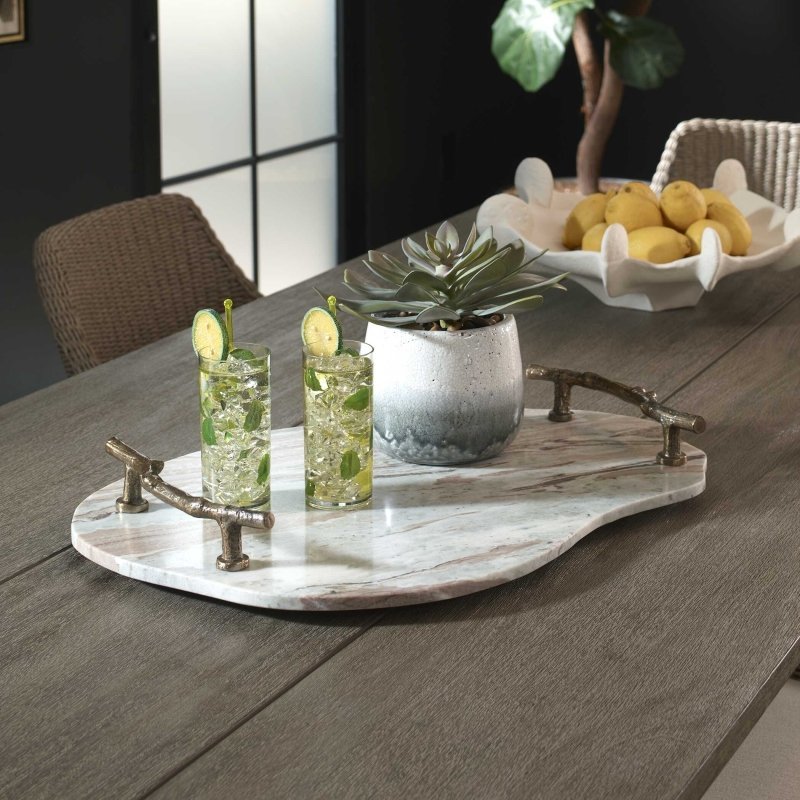
The safest approach is to repeat one material already in the room, then add one contrast. If your coffee table is stone, a marble tray with branch-like metal handles feels connected but not flat. If the room has lots of painted finishes, a natural teak bowl introduces grain and irregularity. If your console has a dark metal frame, a warm wood bowl can keep the entry from feeling severe.
Stone and marble
Best for rooms that need polish, weight, or a cooler finish. Use marble trays with books, candles, or glassware, and keep the objects on top relatively simple.
Wood and teak
Best for softening modern rooms. Natural wood bowls work especially well near black frames, white upholstery, and clean-lined tables.
Metal and mirrored finishes
Best when the room needs light or a repeated hardware tone. Keep shiny trays edited so they do not collect too many reflective objects.
3. Use trays to make useful items look intentional
A tray is the easiest way to make practical objects look designed. On a coffee table, it can hold a remote, a candle, coasters, and a small object. On an entry console, it can hold keys, sunglasses, and mail waiting to be sorted. On a dresser, it can group a small dish, fragrance, and jewelry box.
The key is editing. A tray should not become a junk drawer without a drawer. If it holds daily-use items, limit the visible mix to two or three categories. For example: keys and sunglasses in an entry, coasters and a candle in a living room, or a small vase and a hand towel on a powder room counter.
For a substantial surface, the Stone And Twig Indoor Outdoor Tray works because it has both visual weight and function. Its 26-inch width and marble surface give it enough presence for a coffee table, console, or covered outdoor setting. The branch-like aluminum handles add a natural line, so the tray feels decorative even before anything is placed on it.


4. Use bowls when the room needs softness or a low focal point
Decorative bowls are underrated because they do not always announce themselves in a product photo. In a room, though, they solve a real design problem: they add a curve where furniture is usually rectangular. That curve can make a coffee table, console, or shelf feel more collected.
A bowl does not need to be filled. In fact, many bowls look better when left empty, especially if the material has strong grain, veining, texture, or an irregular handmade form. If you do add something, choose one simple category: decorative beads, moss, seasonal fruit, wrapped candies, matchbooks, or a small stack of linen napkins. Avoid mixing too many small objects, which can make the bowl feel like storage instead of styling.
The Natural Teak Leaf Bowl is a good example of a bowl that can stand on its own. It is handcrafted from teak wood, so cracks, grain changes, and size variation are part of the character. That makes it useful in rooms that feel too polished or too flat.
5. Three finished formulas that work in real rooms
If you are not sure where to start, use one of these formulas. They are intentionally simple because decorative accessories should clarify a room, not compete with the main furniture.
Formula 1: Coffee table tray + books + one object
Place a tray slightly off-center on the coffee table. Add two books, one candle or sculptural object, and one small practical item like coasters. Keep the tallest object toward the back so sightlines across the seating area stay open. If your table is large, pair the tray with a separate low bowl on the opposite side.
This formula works especially well with modern coffee tables because it adds a styled layer while preserving the table's clean shape.
Formula 2: Entry console bowl + lamp + mirror or art
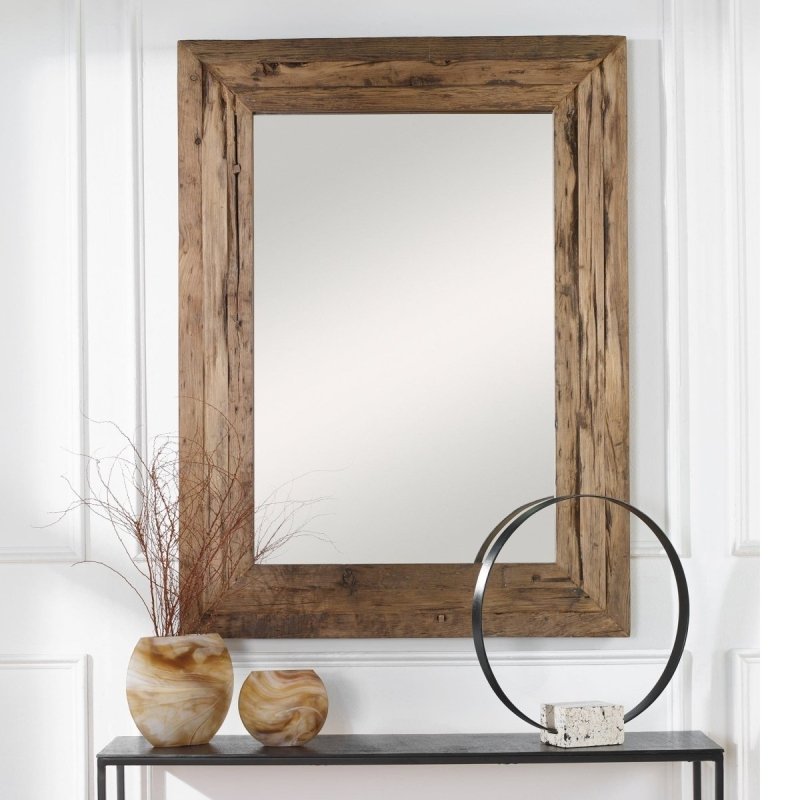
Start with a shallow bowl near the side of the console where keys naturally land. Add a lamp or tall branch arrangement on the opposite side, then use a mirror or art piece behind the setup to create height. Keep the bowl narrow enough that the front edge of the console remains usable.
If you are still building the foundation, browse console tables first, then choose the tray or bowl after you know the console depth.
Formula 3: Shelf bowl + books + vertical object
On a shelf, use a low bowl to interrupt vertical lines. Place it beside upright books or below a taller object so the shelf has a clear high-medium-low rhythm. This is also a good place for a wood bowl because the natural grain keeps shelves from looking too staged.
For more sculptural accessories that can sit with trays and bowls, visit Modern Sculptures.
6. What to avoid
Most tray and bowl mistakes are scale mistakes. A tiny tray on a large coffee table looks timid. A deep bowl on a narrow console gets in the way. A shiny tray filled with shiny objects can create too much visual noise. The fix is to choose one clear role before styling.
- Avoid using a tray as a catchall for everything. Edit it weekly so it stays intentional.
- Avoid too many small pieces. Three larger objects usually look better than seven small ones.
- Avoid matching every finish. Repeat one finish, then add contrast through texture or shape.
- Avoid ignoring height. A low tray often needs one taller nearby element, like a vase, branch, lamp, or framed piece.
- Avoid blocking function. Leave landing space for drinks, books, mail, or serving pieces.
If you want a more entry-specific layout, the related guide How to Style an Entryway Console Table explains console height, proportions, and surface planning in more detail.
7. Outdoor-safe styling: use fewer, heavier pieces
Outdoor and covered patio styling benefits from a simpler hand. Wind, sun, moisture, and frequent movement make lightweight accessory clusters harder to maintain. If a tray or bowl is outdoor-safe, use it as the main decorative object rather than one piece in a crowded arrangement.
A heavy marble tray can hold napkins, glasses, or a small lantern during entertaining. A bowl can hold fruit, towels, or nothing at all. The goal is a surface that looks finished but can still be cleared quickly.
For outdoor-safe or indoor-outdoor pieces, check product descriptions carefully. Materials matter. Marble, resin, teak, aluminum, and certain ceramic finishes can behave differently outdoors, especially in direct sun or standing water. When in doubt, use covered placement and bring smaller decor inside during harsh weather.
Decorative tray and bowl FAQ
Should a decorative bowl be empty or filled?
A decorative bowl can be empty if the shape, grain, or texture is strong enough on its own. If you fill it, use one simple category such as beads, moss, fruit, wrapped candies, or linen napkins so it still looks intentional.
What size tray works best on a coffee table?
A tray usually looks best when it takes up about one quarter to one third of the coffee table surface. That gives it enough presence to anchor smaller objects while leaving functional space for drinks, books, and everyday use.
Can I use a decorative tray on an entry console?
Yes. A shallow tray is useful on an entry console because it gathers keys, sunglasses, or mail into one tidy zone. Choose a tray that leaves several inches clear at the front edge so the console does not feel crowded.
The takeaway
Decorative trays and bowls work because they solve both visual and practical problems. A tray organizes; a bowl softens. A stone or marble piece adds polish; a teak or wood piece adds warmth. The best choice is not the most elaborate one, but the one that gives the surface a clear role.
Start with the room's surface, choose a material that repeats or balances what is already there, and keep the styling edited. That is how a small accessory makes a modern room feel complete.



Leave a comment
This site is protected by hCaptcha and the hCaptcha Privacy Policy and Terms of Service apply.